
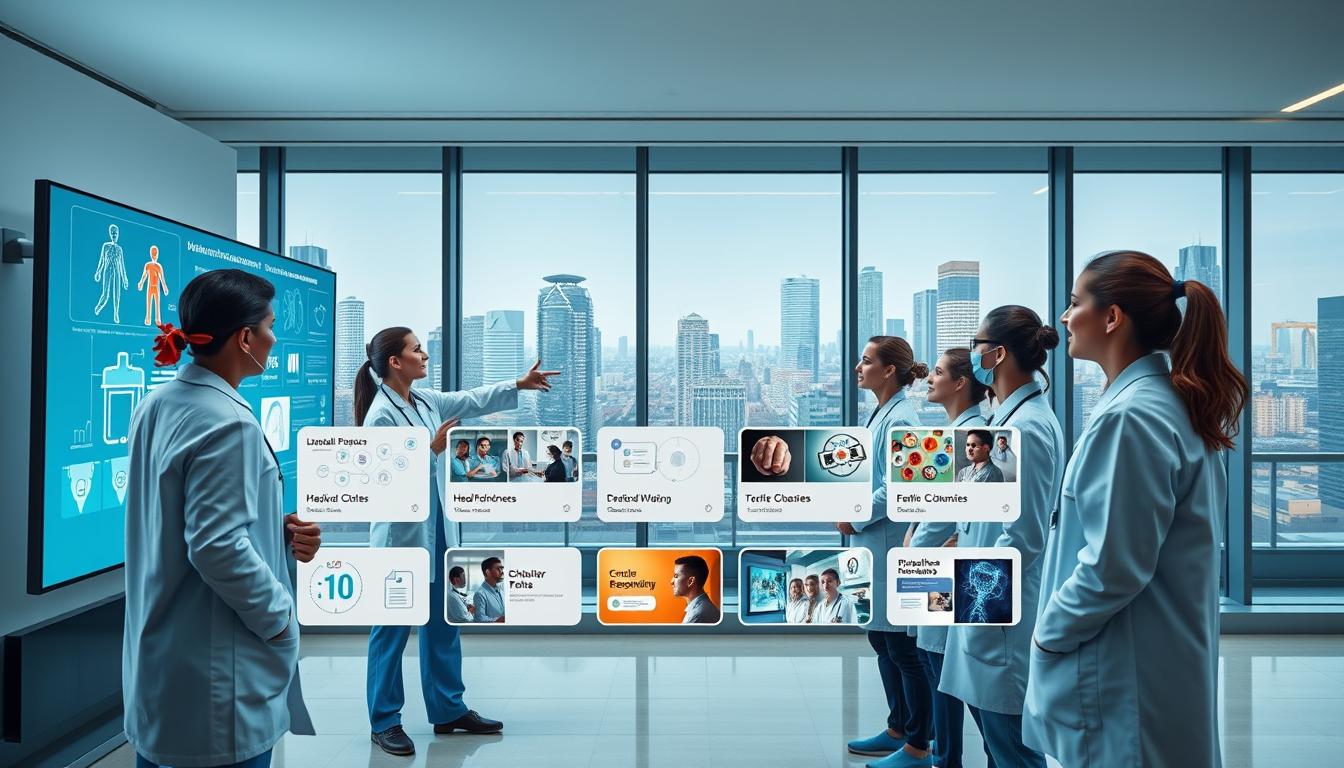

Can you become a healthcare professional without stepping into a traditional classroom? The rise of internet-based healthcare training is rewriting the rules of medical education. With online healthcare courses now offering certified programs, millions are transforming their careers from living rooms to libraries. This shift isn’t just convenient—it’s reshaping how future healthcare workers learn.

Imagine mastering clinical skills through virtual simulations or earning credentials from top universities without relocating. Internet-based healthcare training blends cutting-edge tech with flexible learning, making professional growth accessible to anyone with an internet connection. Whether you’re a nurse seeking specialization or a student exploring healthcare pathways, this guide explains how online learning bridges gaps between ambition and achievement.
Key Takeaways
- Online healthcare courses now offer accredited pathways for certifications and degrees.
- Technology enables hands-on training via virtual labs and patient case studies.
- Flexibility allows learners to balance studies with existing jobs or family.
- Employers increasingly value digital training due to its measurable outcomes.
- Global institutions partner with platforms to deliver up-to-date medical knowledge.
Understanding Internet-Based Healthcare Training
Internet-based healthcare training and virtual medical education redefine how healthcare professionals and learners engage with medical knowledge. This modern approach uses digital tools to deliver courses, simulations, and interactive lessons. Let’s break down its core elements and significance.
What is Internet-Based Healthcare Training?
These programs combine live webinars, pre-recorded lectures, and online labs. Learners can join real-time discussions or revisit material at their own pace. Key components include:
- Live virtual classrooms for live interactions
- Self-paced modules with quizzes
- Access to digital medical libraries
Why is it Important?
Virtual medical education became critical post-pandemic, enabling global access to training. “Online platforms democratize learning, connecting students in remote areas to top instructors,” says a 2023 study. Platforms like specialized programs show how these tools adapt to diverse health topics—from patient care to wellness strategies.
Evolution of Healthcare Training Online
From basic forums to immersive simulations, online learning has transformed:
| Decade | Technology | Learning Style |
|---|---|---|
| 2000s | Email-based forums | Text-heavy, limited interaction |
| 2010s | Video conferencing | Live lectures and discussion boards |
| 2020s | VR and AI tools | Simulated patient scenarios |
This progression highlights how technology shapes modern virtual medical education. As tools advance, so does the depth of training available to learners worldwide.
Key Benefits of Online Healthcare Training
Online healthcare education offers unique advantages tailored to today’s busy learners. From nurses to medical administrators, online healthcare courses and web-based healthcare training programs provide solutions that fit real-life demands. Let’s explore three top benefits:
Flexibility and Convenience
Study anytime, anywhere. Working professionals can balance classes with shifts or family time. Modules let you pause and resume, adapting to life’s unpredictability. No more rushing to campus—login from home or a coffee shop.
Cost-Effectiveness
- No commuting costs for travel or parking
- Lower tuition fees compared to traditional programs
- Eliminate expenses for housing or meal plans
Many institutions offer payment plans, making advanced training achievable without financial strain.
Access to a Wide Range of Resources
Top web-based healthcare training programs connect learners to cutting-edge tools: live patient case studies, digital anatomy simulations, and medical journal archives. Universities like Johns Hopkins and Stanford now share their research libraries with online students, bridging gaps between remote and on-campus access.
Types of Internet-Based Healthcare Training Programs
Choosing the right web-based healthcare training programs starts with understanding your goals. Let’s explore the main types of e-learning healthcare modules available today.

From entry-level credentials to advanced degrees, online learning offers flexible pathways:
Certificates and Diplomas
- Short-term programs (6–12 months) focused on specialized skills
- Examples: Medical coding, phlebotomy, or healthcare administration
- Certificates from providers like Udemy or Coursera can launch careers quickly
Degree Programs
Full degrees are now fully accessible online. Options include:
| Type | Examples | Providers |
|---|---|---|
| Associate Degrees | Nursing, medical assisting | Arizona State University Online |
| Bachelor’s Degrees | Healthcare management, public health | Johns Hopkins University |
| Master’s/Doctoral | Nursing leadership, health informatics | Purdue University Global |
Continuing Education Units (CEUs)
CEUs keep professionals up-to-date. Platforms like HealthEd or Relias offer:
- Clinical skill updates
- Regulatory compliance training
- 10–20 hours per course, often required for licensure renewal
Whether you’re starting a career or advancing skills, these options align with your schedule and goals. Explore programs like Stanford’s online telemedicine CEUs or Georgetown’s public health certificates to find your fit.
Essential Skills Learned in Online Healthcare Training
Online healthcare education isn’t just about theory—it builds practical skills critical for real-world success. Modern e-learning healthcare modules and digital healthcare training resources equip learners with abilities that bridge classroom knowledge and patient care.
Communication and Interpersonal Skills
Virtual patient simulations and live video consultations teach how to convey empathy and clarity. Platforms like Zoom or role-playing exercises help students practice breaking bad news, taking medical histories, and collaborating with multidisciplinary teams. A 2023 study in the Journal of Medical Education noted, “Telehealth training reduced communication anxiety by 34% among new trainees.”
Technical Proficiency
Hands-on training with tools like Epic’s EHR software or telemedicine platforms prepares learners for tech-driven workplaces. Students master:
- Electronic health record management
- Telemedicine platform navigation
- Health data security protocols
These skills align with the U.S. Bureau of Labor Statistics’ emphasis on IT literacy in modern healthcare roles.
Critical Thinking and Problem Solving
Interactive case studies in digital healthcare training resources challenge learners to diagnose complex scenarios. For example, a diabetes management simulation might require prioritizing treatments under time constraints. Such exercises build the decision-making rigor needed in high-stakes clinical settings.
Whether mastering communication in virtual rounds or troubleshooting tech issues during remote consultations, these skills ensure graduates thrive in today’s healthcare ecosystem.
Choosing the Right Online Healthcare Training Program
Picking the perfect program starts with smart research. These steps ensure you select a training path that matches your goals:
Accreditation and Credentials
Accreditation matters most. Look for programs approved by agencies like the Commission on Accreditation of Allied Health Education Programs (CAAHEP) or ACEN. Ask:
- Is this program recognized by national accrediting bodies?
- Will credits transfer to other institutions?
- Does it prepare students for certification exams?
Curriculum and Specializations
Curriculum depth shapes your skills. Check if the program offers:
- Specialized tracks in your field (e.g., nursing, public health)
- Access to digital healthcare training resources like simulations or case studies
- Clinical practicum options for hands-on learning
Faculty Qualifications
Trained instructors make all the difference. Look for faculty with:
- Real-world healthcare experience
- Expertise in remote medical learning methods
- Publications or industry certifications
Ask current students about instructor responsiveness. Quality faculty ensure you gain practical knowledge to apply in real-world settings.
Popular Online Platforms for Healthcare Training
Online platforms offer flexible access to remote medical learning and telehealth education offerings, making healthcare training accessible worldwide. Here’s how leading platforms stand out.

Coursera
Coursera collaborates with top universities like Johns Hopkins and the University of Michigan. Their programs include hands-on courses like the Anatomy specialization and healthcare management tracks. Pricing starts at $39/month for full access, with certificates issued upon completion. Learners highlight interactive labs and instructor support.
- Partnerships: Johns Hopkins, University of Michigan
- Key courses: Anatomy, Healthcare Management
- Pricing: $39/month or $49 per course
edX
edX offers telehealth education offerings from Harvard Medical School and other institutions. Their HarvardX programs cover public health, epidemiology, and global health strategies. Courses are free to audit, while certificates cost $99–$139. Networking with global peers is a standout feature.
- Featured programs: HarvardX public health series
- Certification pricing: $99–$139
- Peer networking through discussion forums
Udemy
Udemy provides affordable, skill-focused courses like medical terminology and HIPAA compliance training. Courses start at $10 and include lifetime access to materials. While certificates vary by course, flexibility makes it ideal for learners balancing work and study.
- Affordable pricing: Courses from $10
- Popular topics: Medical terminology, compliance
- Lifetime access to course content
Overcoming Challenges in Online Learning
Online internet-based healthcare training and telehealth education offerings offer flexibility, but students often face hurdles like isolation or burnout. Here’s how to tackle them:
Staying Motivated
A 2023 survey found 68% of students struggle with motivation. Combat this by:
- Setting small milestones with rewards (e.g., a study break after completing a module)
- Connecting coursework to career goals (e.g., “This anatomy course will help me assist telehealth patients better”)
“I kept a vision board with my future clinic’s logo. It reminded me why I started.” – Dr. Emily Torres, Telehealth Educator
Mastering Time Management
Healthcare workers balance shifts and studies. Try:
- Use digital planners like Google Calendar to block study hours
- Sync coursework deadlines with off-duty periods
| Tool | Use Case |
|---|---|
| Slack | Quick Q&A sessions with peers |
| Notion | Track assignments and deadlines |
Engaging with Peers and Instructors
Build connections through:
Join virtual study groups on platforms like Discord. Use Zoom breakout rooms during telehealth education offerings sessions. Proactively ask instructors for feedback via email checklists.
Future Trends in Online Healthcare Training
Healthcare education continues to evolve, driven by technology and shifting patient needs. Here’s what’s next for those exploring virtual medical education and online healthcare courses:
Virtual Reality Transforms Practical Skills
Imagine practicing surgeries or patient interactions in a simulated environment. Virtual reality (VR) is becoming a staple in virtual medical education, offering risk-free training. Medical schools now use VR to teach everything from emergency response to delicate procedures. Platforms like Osso VR let students repeat tasks until mastery, boosting confidence before real-world application.
Learning Paths Tailored to You
Adaptive platforms now adjust lessons based on your progress. These tools analyze your strengths and weaknesses, delivering personalized content. For example, Khan Academy Health’s algorithms offer customized quizzes and video recommendations to help learners grasp challenging topics faster. This approach turns online healthcare courses into dynamic, student-centered experiences.
Telehealth Training Expands
As telemedicine grows, courses now focus on virtual patient care. Programs like Johns Hopkins’ Telehealth Essentials teach communication via video calls, digital diagnosis tools, and ethical standards for remote care. Hospitals increasingly seek staff trained in these skills, making telehealth training a must-have in any healthcare resume.
“The future belongs to those who adapt their training to new tech and care models.” — American Medical Association, 2023 Report
Tips for Success in Internet-Based Healthcare Training
Mastering internet-based healthcare training starts with practical strategies to stay focused and organized. These steps help turn online learning into a pathway for growth in healthcare careers.
Setting Achievable Goals
Begin by setting specific, measurable goals. Break larger objectives like earning a certification into weekly study sessions or daily tasks. For example, dedicate 30 minutes each morning to review clinical case studies or practice using telehealth platforms. Tracking progress builds momentum toward completing your internet-based healthcare training program.
Creating a Dedicated Study Space
Design a workspace that mimics a professional environment. Use a quiet area with good lighting and a comfortable chair. Keep essential tools nearby, such as stethoscope simulators or anatomy apps. Avoid distractions like social media by using apps like Freedom or StayFocusd during study hours. A clear, organized space signals the brain it’s time to learn.
Utilizing Online Resources Effectively
Go beyond course materials by exploring digital healthcare training resources like PubMed for research or OSHA guidelines for safety protocols. Join forums on platforms like Coursera or edX to connect with peers. Practice clinical skills through virtual labs from organizations like Labster or simulate patient interactions using platforms like OSCEd.
Your efforts in internet-based healthcare training will shape your expertise and open doors to roles in telemedicine, public health, or hospital administration. Stay consistent, and let these strategies turn challenges into stepping stones for your healthcare career.